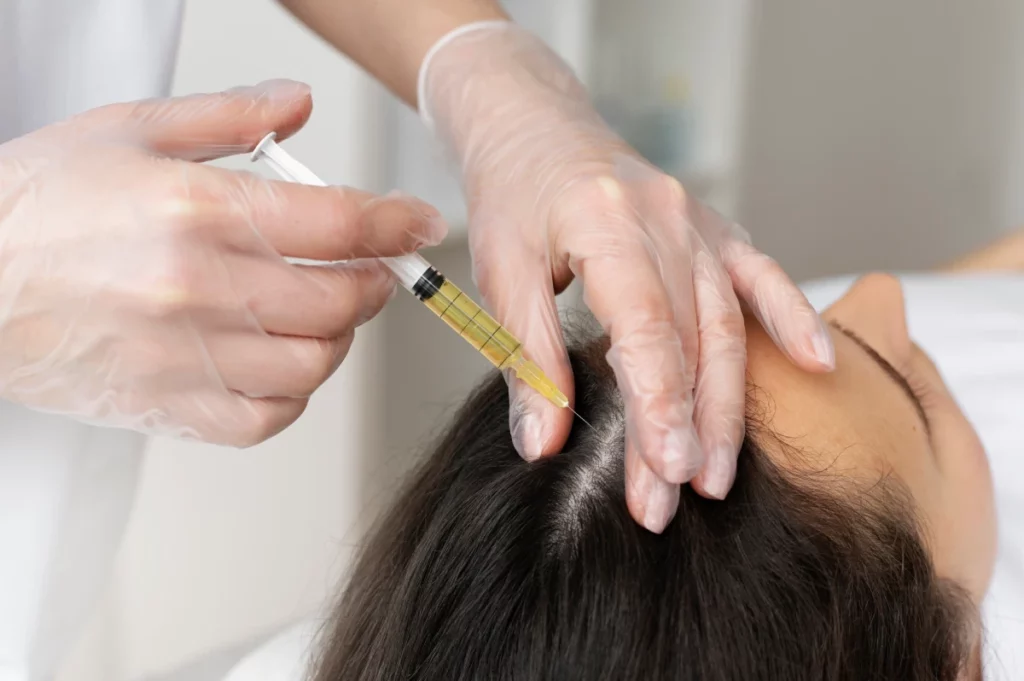
Hair thinning can make people impatient. Once the parting widens or the crown starts to show, many patients look for the fastest option available. That is when PRP often enters the conversation. It sounds natural, minimally invasive, and promising. But before choosing advanced PRP treatment in Chennai, patients should understand what PRP can and cannot do, and why the first step should always be a proper hair and scalp diagnosis.
The process is clear: a small amount of blood is drawn, processed to isolate platelet-rich plasma, and injected into targeted areas of the scalp. It also notes that the cost of PRP hair treatment in Chennai can vary based on the clinic, number of sessions, extent of hair loss, and treatment plan.
That is the practical starting point. PRP is not a one-size-fits-all hair solution. It is a medical procedure that works best when the patient is suitable, the scalp is assessed properly, and expectations are realistic.
PRP Should Not Be the First Thing You Decide
The first decision is not whether to take PRP.
The first decision is to understand what type of hair loss you have.
Hair fall can come from many causes:
- Androgenetic alopecia
- Telogen effluvium after illness or stress
- Nutritional deficiency
- Thyroid imbalance
- Hormonal changes
- Post-pregnancy shedding
- Scalp inflammation
- Dandruff-related irritation
- Alopecia areata
- Medication-related shedding
- Hair breakage from styling or treatments
These conditions do not need the same plan. PRP may help selected patients, especially those with active follicles and early to moderate patterned thinning. But it may not be the main answer for sudden shedding, untreated deficiency, infection, scarring hair loss, or hair breakage.
A dermatologist should identify the cause before recommending PRP.
What PRP Actually Is
PRP stands for platelet-rich plasma. It is prepared from your own blood.
The procedure generally includes:
- Drawing a small blood sample
- Processing the blood in a centrifuge
- Separating the platelet-rich plasma
- Preparing the scalp
- Injecting PRP into targeted thinning areas
Platelets contain growth factors that may support tissue repair and follicle activity. The American Academy of Dermatology notes that PRP involves drawing a small amount of blood, processing it, and injecting the platelet-rich plasma into areas of hair loss; it also describes PRP as a treatment that studies show can be safe and effective for hair loss in appropriate cases.
That said, “safe and effective” does not mean guaranteed for every patient. The result depends on diagnosis, technique, stage of hair loss, treatment schedule, and individual response.
PRP Is Better for Thinning Than Complete Baldness
One of the most important things patients should know is this: PRP works with existing follicles.
If the follicle is still present but weak, PRP may help improve hair thickness, density, or shedding patterns in some patients. If the area has been long-term bald and follicles are no longer active, PRP is unlikely to produce new hair from scratch.
This is why early consultation matters.
Patients with early crown thinning, widening parting, temple thinning, or mild to moderate density loss may be better candidates than patients with long-standing smooth bald areas.
A good dermatologist should be honest about this. If the scalp area no longer has active follicles, another treatment route may be needed.
PRP Is Not a Hair Transplant
PRP and hair transplant are often confused because both are discussed under hair restoration.
They are not the same.
A hair transplant moves follicles from one area of the scalp to another. PRP does not move follicles. It uses platelet-rich plasma to support existing follicle activity.
PRP may be used:
- As a non-surgical option for selected thinning cases
- Alongside medical hair loss treatment
- After a hair transplant in selected patients
- As maintenance support in some treatment plans
It should not be presented as a replacement for transplant surgery when the patient has advanced baldness and needs graft placement.
You May Need Blood Tests First
Not every patient needs extensive testing before PRP, but some do.
If the hair loss pattern is unclear, sudden, diffuse, or linked to fatigue, menstrual changes, weight loss, illness, or other symptoms, the dermatologist may advise blood tests.
These may check issues such as:
- Iron levels
- Vitamin deficiencies
- Thyroid function
- Hormonal markers
- General health indicators
- Inflammation or other medical factors
This is not a delay for the sake of delay. It helps avoid treating the scalp while missing the actual trigger.
For example, if hair fall is mainly due to severe deficiency, correcting that deficiency may be essential. PRP alone cannot fix the root problem.
Scalp Condition Matters Before PRP
Patients often focus only on hair strands, but the scalp needs attention too.
PRP is injected into the scalp, so the scalp should be assessed before treatment. If there is active infection, severe dandruff, inflammation, painful bumps, or uncontrolled itching, the dermatologist may need to treat that first.
Scalp issues that may need attention include:
- Seborrhoeic dermatitis
- Psoriasis
- Folliculitis
- Fungal infection
- Excessive scaling
- Painful pustules
- Severe itching
- Product irritation
A clean-looking scalp is not always a healthy scalp. A proper examination helps decide whether PRP should proceed immediately or wait until the scalp is calmer.
The Procedure Needs Multiple Sessions
PRP is not usually a single-session treatment. Hair growth is slow, and follicle response takes time.
Many patients need a planned series of sessions, followed by review. Some may need maintenance sessions later, depending on response and diagnosis.
Before starting, ask the clinic:
- How many sessions are recommended?
- How far apart will they be?
- When will progress be reviewed?
- Will photos be taken for comparison?
- Is maintenance expected?
- What happens if response is poor?
Patients should be cautious if PRP is sold as a one-time solution with dramatic results.
Results Take Time
Hair regrowth is gradual. Patients should not expect visible density changes within a few days.
Early signs may include:
- Reduced shedding
- Better scalp comfort
- Less visible thinning over time
- Slight improvement in hair thickness
- Slower progression of thinning
- Better response when combined with other treatments
Visible improvement may take months. Some patients respond well. Some respond modestly. Some do not respond enough to justify continuing.
That is why baseline photos and follow-up reviews matter. They help separate real improvement from wishful thinking.
PRP May Work Better as Part of a Combined Plan
For many patients, PRP works best when it is not used alone.
Depending on the diagnosis, the dermatologist may combine PRP with:
- Medical hair loss treatment
- Anti-dandruff treatment
- Nutritional correction
- Scalp inflammation control
- Hair care changes
- Lifestyle guidance
- Maintenance therapy
The right combination depends on the patient.
For example, someone with patterned thinning may need long-term medical maintenance. Someone with dandruff-related shedding may need scalp treatment. Someone with low iron may need correction before expecting meaningful improvement.
PRP should fit into the plan. It should not replace the plan.
Cost Should Be Understood Before Starting
PRP is usually paid per session, and most patients need more than one session. That means the total cost is not only the price of one appointment.
When comparing PRP cost, ask:
- What is the cost per session?
- How many sessions are recommended?
- Are consultation charges separate?
- Are follow-ups included?
- Are blood tests extra?
- Is any medication included?
- Are maintenance sessions expected?
- What happens if sessions are delayed?
Velantis’ PRP guide notes that Chennai pricing can vary based on clinical and treatment factors, so patients should understand the full plan before beginning treatment.
Choosing only the cheapest option is not always safe. PRP involves blood handling, scalp injections, sterile technique, and medical judgement.
Technique and Safety Matter
PRP is often marketed casually, but it is still a medical procedure.
The clinic should follow proper hygiene and sterile handling. The doctor should know where to inject, how much to inject, how often to repeat sessions, and when not to proceed.
A safe PRP setup should include:
- Qualified medical supervision
- Sterile blood collection
- Proper centrifuge processing
- Clean injection technique
- Scalp preparation
- Post-procedure instructions
- Clear follow-up plan
Possible side effects may include temporary pain, tenderness, swelling, mild bleeding, bruising, or scalp sensitivity. Serious complications are uncommon when the procedure is done properly, but poor technique can raise risks.
Ask Who Will Perform the Treatment
This is a practical but important question.
Before booking PRP, ask:
- Who will examine me?
- Who will decide whether I am suitable?
- Who will perform the injections?
- Is a dermatologist supervising the treatment?
- What qualifications does the doctor have?
- How is sterility maintained?
- What protocol is followed?
Do not book only because the clinic has attractive before-and-after images. PRP quality depends on medical assessment, preparation, and technique.
PRP Is Not Suitable for Everyone
Patients should be prepared to hear that PRP may not be the right choice.
It may not be suitable or may need postponement if:
- Hair loss is too advanced
- The cause is not diagnosed
- There is an active scalp infection
- There is uncontrolled scalp inflammation
- Hair loss is mainly from breakage
- Nutritional or hormonal issues need correction first
- The patient has certain blood disorders
- The patient is on medications that affect suitability
- Expectations are unrealistic
- The patient cannot complete the treatment schedule
A clinic that says yes to everyone is not being careful enough.
Before-and-After Photos Need Context
Before-and-after photos can be helpful, but they can also mislead patients.
Photos may not show:
- The diagnosis
- Stage of hair loss
- Number of sessions
- Other treatments used
- Lighting differences
- Hair styling changes
- Time gap between images
- Maintenance therapy
- Patient age and health factors
Use photos as one reference, not proof that you will get the same result.
A better question is: “Based on my scalp and hair loss type, what result is realistic for me?”
Do Not Stop Other Treatments Without Asking
Some patients start PRP and stop everything else, assuming PRP will replace medical treatment. That can be a mistake.
If you are already using dermatologist-prescribed hair loss medication, dandruff treatment, or nutritional therapy, do not stop it unless the doctor advises you to.
Hair loss often needs long-term management. PRP may support the plan, but stopping maintenance too early can affect progress.
The treatment plan should be coordinated, not random.
What to Expect on Treatment Day
A typical PRP session may involve consultation or review, blood draw, PRP preparation, scalp marking or targeting, injections, and post-care instructions.
You may feel mild discomfort during injections. Some clinics use measures to improve comfort, depending on the protocol.
After treatment, you may be advised to avoid certain activities or hair products for a short period. Follow the clinic’s instructions carefully.
Do not apply random oils, harsh shampoos, or scalp actives immediately after the procedure unless advised.
Track Progress Properly
Hair changes are slow and easy to misjudge. Patients may feel nothing is happening even when shedding is reducing. Others may believe there is improvement because the styling looks better.
Progress tracking should be more objective.
Useful methods include:
- Baseline scalp photos
- Same-light follow-up photos
- Parting-width comparison
- Crown-density comparison
- Shedding history
- Scalp symptoms
- Doctor review
- Treatment timeline notes
This helps decide whether PRP should continue, pause, or be combined with another approach.
Red Flags Before Booking PRP
Be careful if a clinic:
- Promises guaranteed regrowth
- Says one session is enough for everyone
- Does not examine the scalp
- Does not ask about medical history
- Does not discuss diagnosis
- Offers PRP for complete baldness without explanation
- Pushes packages before consultation
- Avoids discussing cost clearly
- Cannot explain who performs the procedure
- Does not mention follow-up
- Uses vague “stem cell” or “miracle growth” language casually
Hair loss already makes patients vulnerable. Treatment decisions should stay calm and medically grounded.
Questions to Ask During Consultation
Before starting PRP, ask:
- What type of hair loss do I have?
- Am I a good candidate for PRP?
- Are my follicles still active?
- Do I need blood tests?
- Is my scalp healthy enough for PRP now?
- How many sessions do you recommend?
- What result is realistic?
- Will I need other treatments too?
- What are the risks?
- What is the total expected cost?
- How will progress be measured?
- What happens if I do not respond?
A good dermatologist should answer these without making the patient feel rushed.
Final Word
PRP hair treatment can be a useful option for selected patients, especially those with early or moderate thinning and active follicles. It may help support hair density, thickness, scalp recovery, and long-term hair restoration planning when used properly.
But it is not a universal cure for hair fall. It should not be chosen only because it sounds advanced or because a clinic is offering a package. The right order is diagnosis first, suitability second, treatment third.
If you are considering advanced PRP treatment in Chennai, focus on the quality of consultation before the procedure itself. A good dermatologist will clearly explain your hair-loss type, scalp condition, realistic outcomes, session plan, costs, and follow-up. That clarity is what separates responsible PRP care from another hopeful experiment.
About the Author