Introduction
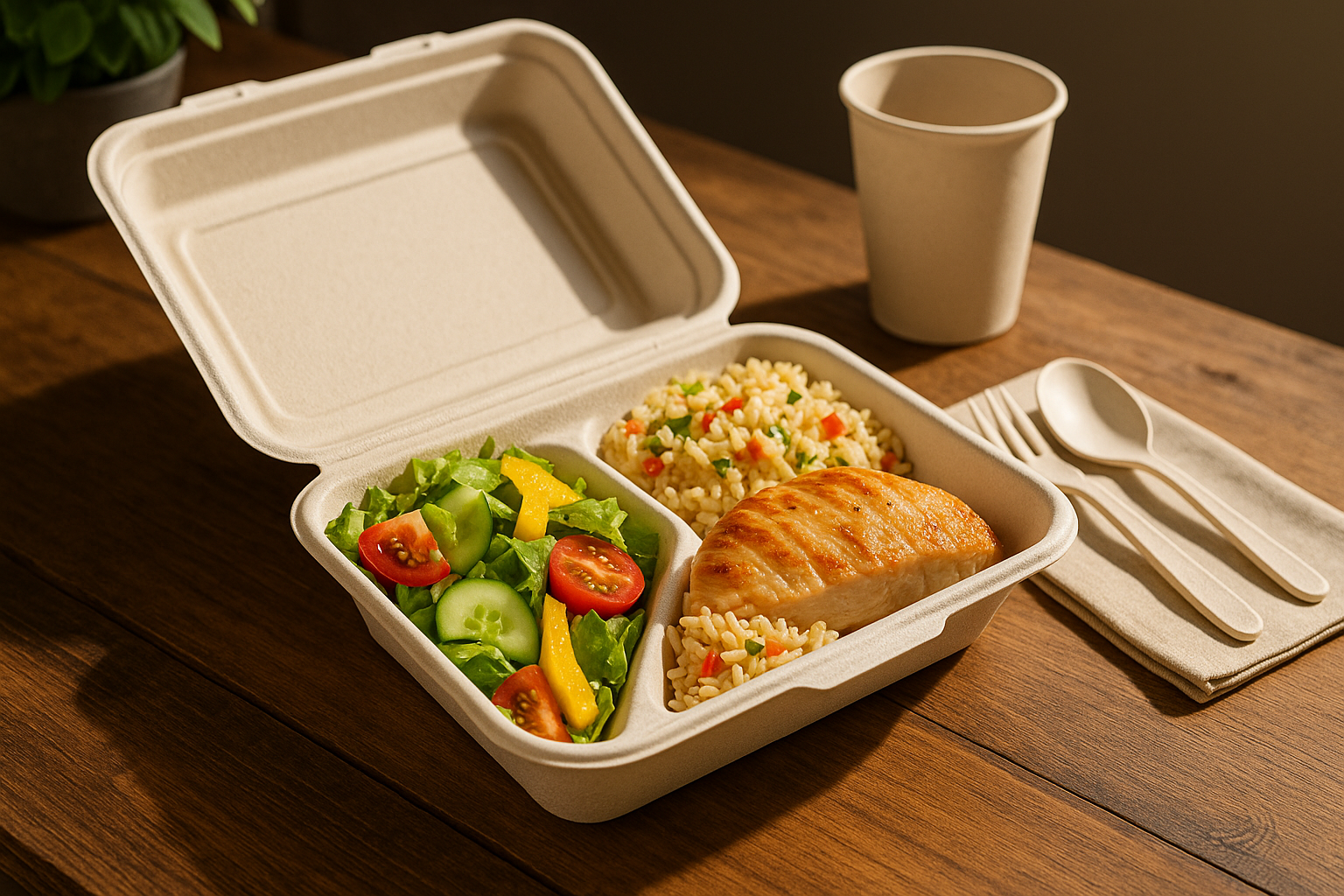
“Plastic or paper?” used to be the question at every takeout counter. Today, the answer is neither. Modern consumers are asking for biodegradable takeaway containers—and food businesses are finally listening.
From New York to Singapore, cafés, restaurants, and delivery brands are rethinking how they package their food. The movement is not just about going green—it’s about redefining quality, presentation, and consumer trust. And at the heart of this global shift is Bioleader, a manufacturer pioneering eco-friendly food packaging that’s as functional as it is sustainable.
This is not a passing trend—it’s a complete transformation of how the food industry thinks about packaging.
The Global Takeout Boom and Its Environmental Cost
The rise of food delivery platforms has been explosive. According to Statista (2025), the global online food delivery market will exceed $500 billion by 2030, driven by fast urban lifestyles and convenience culture.
But with that growth comes a downside: plastic packaging waste. The OECD Global Plastics Outlook reports that 36% of all plastic produced is used for packaging, and less than 10% is recycled. The rest ends up in landfills or oceans—posing severe ecological risks.
As a result, governments worldwide are tightening restrictions on single-use plastics. Consumers, too, are voting with their wallets—74% say they prefer restaurants using eco-friendly packaging (Deloitte Sustainable Brands Report, 2024).
This has fueled a surge in demand for sustainable options like biodegradable takeaway containers, made from renewable materials such as sugarcane bagasse and cornstarch.
Why Bagasse Is the Future of Food Packaging
Bagasse is the fibrous residue left after extracting juice from sugarcane—a byproduct once burned or discarded. Today, it’s being transformed into strong, heat-resistant, and fully compostable containers that can replace plastic in almost every application.
Scientific findings from the Journal of Cleaner Production (2024) reveal:
- Bagasse emits 70–80% less CO₂ than petroleum-based plastics.
- It decomposes within 60–90 days, leaving no microplastics.
- It withstands temperatures up to 120°C, perfect for hot soups or fried meals.
- It’s PFAS-free (no harmful forever chemicals).
That’s why bagasse packaging has become the top choice for biodegradable containers for food—offering both environmental and performance advantages.
Restaurants across the world are switching not only for sustainability but also for presentation: the clean, minimalist look of molded bagasse elevates brand aesthetics and enhances customer perception.
Bioleader: The Manufacturer Behind the Movement
While many suppliers offer “green packaging,” few combine sustainability with scalability like Bioleader. Based in Xiamen, China, the company has become a global leader in the manufacturing of biodegradable and compostable packaging for foodservice industries.
Bioleader’s strengths lie in its vertical integration—from pulp processing to molding, coating, and packaging—all within one production system. This ensures:
- Consistent quality control
- High-volume capacity for export orders
- Short lead times for global distributors
- Flexible OEM/ODM customization for branding
Its PFAS-free production lines, combined with certifications including EN13432, ASTM D6400, BPI, and TÜV OK Compost, position Bioleader as a trusted supplier for international chains, retailers, and sustainable brands.
Their portfolio includes everything from plates and clamshells to biodegradable containers for food—designed for real-world performance and commercial viability.
Case Study: From Plastic to Compostable in 90 Days
In 2024, a major Southeast Asian meal-prep company transitioned to Bioleader’s compostable carry-out containers across all branches. The results were immediate:
- 68% reduction in plastic waste within six months.
- 45% decrease in carbon emissions per unit (based on third-party LCA audit).
- Improved customer satisfaction, with 81% of surveyed customers praising the switch to sustainable packaging.
- EPR compliance achieved in advance of upcoming 2025 packaging mandates.
This case highlights how sustainability isn’t just an ethical choice—it’s a strategic advantage for future-proofing business operations.
For high-volume restaurant groups and delivery platforms, Bioleader’s compostable carry-out containers have become a reliable, compliant, and brand-enhancing solution.
The Science of Compostability: Why It Matters
To qualify as “compostable,” packaging must fully break down into natural components (CO₂, water, and biomass) under industrial composting conditions—without releasing toxins.
Bagasse meets this requirement naturally. When composted, it enriches the soil rather than polluting it. Plastic, by contrast, can take 400–600 years to degrade and often leaches harmful additives into groundwater.
| Property | Plastic | Bagasse | Difference |
| Decomposition Time | 400 years | 90 days | 99.9% faster |
| Heat Resistance | 100°C | 120°C | Better for hot foods |
| PFAS Content | Often present | None | Healthier |
| Carbon Footprint | 3.2 tons CO₂/ton | 1.0 ton CO₂/ton | -68% |
| End-of-Life | Landfill | Compost | Circular economy |
For consumers, this means guilt-free convenience; for businesses, it means measurable sustainability gains.
Bioleader’s Role in Global Sustainability
Beyond manufacturing, Bioleader is helping shape international environmental standards. The company’s 2025 Sustainability Roadmap focuses on:
- Zero-waste production — Closed-loop water and biomass energy reuse systems.
- PFAS-free innovation — Safer coatings for food packaging.
- ESG accountability — Transparent reporting of CO₂ and energy savings.
- Education partnerships — Promoting composting awareness among distributors.
Bioleader’s efforts have earned it recognition at the 2025 Green Asia Innovation Awards for “Sustainable Material Innovation.”
By demonstrating that eco-friendly packaging can be both profitable and scalable, Bioleader is setting a new benchmark for responsible manufacturing in Asia.
Why Restaurants Should Switch Now
Whether you’re a neighborhood eatery or a nationwide chain, transitioning to biodegradable packaging offers tangible benefits:
- Future compliance: Stay ahead of regulatory bans.
- Brand differentiation: Stand out in a competitive market.
- Customer loyalty: Appeal to eco-conscious diners.
- Lower carbon footprint: Reduce your environmental impact.
- Operational efficiency: Lightweight and stackable designs simplify logistics.
As the food delivery economy grows, sustainable packaging isn’t just good PR—it’s essential infrastructure for modern F&B operations.
Frequently Asked Questions
1. What are biodegradable containers made of?
Most are made from renewable fibers like sugarcane bagasse, cornstarch, or bamboo.
2. How long does it take for these containers to break down?
Typically, 60–90 days under industrial composting conditions.
3. Are Bioleader’s containers safe for food contact?
Yes. They are certified under FDA, LFGB, and TÜV OK Compost for direct food use.
4. Can biodegradable containers handle hot food?
Absolutely. Bagasse containers are heat-resistant up to 120°C and suitable for microwaves.
5. Why choose Bioleader over other suppliers?
Bioleader combines certified quality, OEM customization, and industrial-scale production—making it ideal for global distributors and restaurant chains.
Conclusion
The global foodservice industry is standing at a crossroads: continue the plastic habit or invest in a circular future. With the rise of biodegradable takeaway containers, biodegradable containers for food, and compostable carry-out containers, brands now have a real opportunity to align profit with purpose.
Bioleader proves that innovation and sustainability can coexist without compromise. Their commitment to PFAS-free, high-performance packaging is helping restaurants and retailers worldwide embrace the future of responsible dining.
As the world rethinks packaging, one thing is clear—the future of takeout is biodegradable.
About the Author