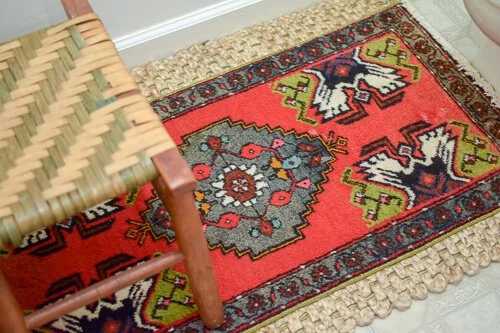
At first glance, many rugs look almost identical. A machine-made rug can copy the design of a traditional oriental or Persian rug so closely that it becomes difficult to tell the difference immediately. This is where many buyers get confused.
The reality is that the difference is significant. A handmade rug is created over time using skill and traditional techniques, while a machine-made rug is produced quickly in a factory. One is built to last for decades and even generations, while the other is usually designed for short-term use. Understanding how to tell the difference helps you avoid overpaying and ensures you invest in something with real value. Trusted rug specialists such as Sharafi & Co. often highlight these differences to help buyers make informed decisions when choosing authentic handmade rugs.
Flip the Rug and Check the Back
The easiest and most reliable way to identify a handmade rug is to turn it over and look at the back. This simple step can reveal everything you need to know.
A handmade rug will show individual knots that are slightly uneven. The design will appear on the back as well, but it will not look perfectly identical to the front. This is because each knot is tied by hand, which naturally creates small variations.
A machine-made rug, on the other hand, will look very uniform from the back. The pattern often appears too perfect, sometimes even printed or supported by a backing layer. If the structure looks flawless and consistent, it is most likely machine-made.
Look at the Fringes Carefully
Fringes are often overlooked, but they are one of the clearest signs of authenticity.
In a handmade rug, the fringe is part of the rug itself. It is formed from the foundation threads that run through the entire piece. Because of this, it feels connected and natural, even if it looks slightly uneven.
In a machine-made rug, the fringe is usually added after production. It may look too clean or perfectly aligned, and in some cases, you can even notice stitching where it has been attached. This small detail can quickly tell you a lot about how the rug was made.
Notice Imperfections in the Design
Perfection in rugs is often misleading. Handmade rugs are not perfectly symmetrical, and that is actually a good thing.
When a rug is made by hand, slight variations in pattern, spacing, or alignment naturally occur. These differences are subtle but visible if you look closely. They are not flaws, but signs of human craftsmanship.
Machine-made rugs are designed to be exact. Every part of the pattern is repeated with precision, and the overall design looks completely uniform. If everything appears too perfect, it is usually not handmade.
Feel the Texture and Weight
Touching the rug gives you another strong clue. A handmade rug has a certain depth and density that you can feel immediately. The surface is not completely smooth, and there is a natural texture that comes from the hand-knotting process.
It also tends to feel heavier because of the tightly packed knots and natural materials used in its construction.
A machine-made rug feels flatter and more uniform. The surface is often overly smooth, and the overall weight is lighter. In some cases, it may even feel slightly synthetic or artificial when you run your hand across it.
Check the Material Used
Material plays an important role in identifying authenticity. Handmade rugs are usually made from natural materials such as wool, silk, or cotton. These materials feel warm, soft, and durable, and they improve in appearance over time.
Machine-made rugs often use synthetic materials like polyester or nylon. These may look appealing at first, but they tend to feel different and do not age in the same way. The texture can feel slightly plastic-like, especially when compared to natural fibers.
Look at the Edges of the Rug
The edges, or sides, of the rug can also provide useful information. In handmade rugs, the edges are finished by hand, which means they may not look perfectly even. There can be small variations in thickness or alignment.
Machine-made rugs usually have very clean and uniform edges. Everything looks precise and identical from one side to the other, which reflects the automated process used to create them.
Think About Price and Production Time
Another practical way to judge a rug is to consider how it was made and how long it would take. A handmade rug requires a lot of time and skilled labour. Because of this, it is rarely sold at a very low price.
If you come across a large, detailed rug that is surprisingly cheap, there is a strong chance it is machine-made. While price alone should not be the only factor, it often supports what you observe in the rug itself.
Ask Questions When Buying
If you are unsure, asking the right questions can make things clearer. A genuine seller will always be transparent about how the rug was made, what materials were used, and where it comes from.
Trusted specialists like Sharafi and Co focus on authentic handmade oriental and Persian rugs. They provide clear details about craftsmanship and origin, which helps buyers understand exactly what they are purchasing without confusion.
Final Thoughts
Telling whether a rug is handmade or machine-made becomes much easier once you know what to look for. Simple checks like turning the rug over, examining the fringe, feeling the texture, and noticing small imperfections can quickly reveal the truth.
You do not need expert knowledge to make a good decision. You just need to slow down, observe carefully, and trust the details in front of you.
About the Author