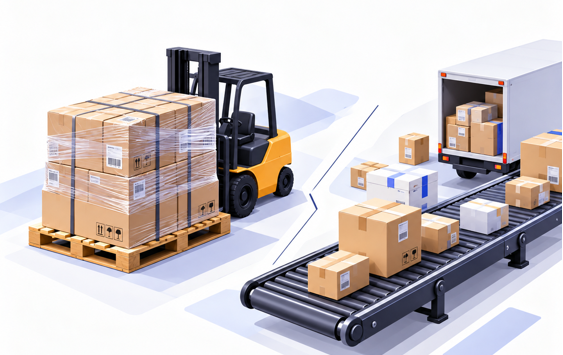
For heavy or multi-box shipments, pallet shipping is usually cheaper than parcel. Parcel carriers price each package separately and charge more as weight and size climb, while pallet shipping groups your boxes into one shipment and prices them together. For a single light box, parcel is normally cheaper and faster. The exact break-even depends on weight, size, distance, and carrier, so this guide explains what drives the difference and how to decide.
What Is Pallet Shipping?
Pallet shipping means sending freight stacked and secured on a pallet, usually as an LTL (less-than-truckload) shipment. A carrier picks up the pallet with a forklift or pallet jack, may move it through terminals, and delivers it to the receiver. It is the standard way for businesses to move heavy, bulky, or multi-box orders.
How Pallet Shipping Works
You request quotes based on weight, dimensions, pickup and delivery locations, and any special services. The carrier collects the pallet, and your shipment shares trailer space with other freight, so you pay for the space you use instead of a whole truck. Many shippers send between one and six pallets at a time, which is the range where LTL is typically the best fit.
What Is the Standard Pallet Size?
The most common size in North America is 48 inches by 40 inches. Many warehouses, forklifts, and trailers are set up around it, which is one reason it is so widely used. Other sizes exist, such as 48 by 48 inches, but you should always declare the real dimensions of the loaded pallet, including any overhang.
Pallet Shipping vs Parcel: What Is the Difference?
| Factor | Pallet shipping | Parcel |
| Best for | Heavy, bulky, or multi-box loads | Light single boxes |
| Pricing basis | Weight, freight class, lane, extras | Weight and package size, per package |
| Handling | Forklift or pallet jack | Conveyors and sorting hubs |
| Transit | Often a few days or more | Usually faster |
| Typical weight | Several hundred to thousands of pounds | Under roughly 150 pounds per package |
When Is Pallet Shipping Cheaper?
Pallet shipping tends to win as soon as a shipment becomes heavy or involves several boxes. The reason is simple: parcel costs scale with every additional package, while a pallet turns many boxes into one shipment.
Heavy or Multi-Box Shipments
Imagine sending ten boxes to the same address. As parcels, you pay ten separate charges, and any package over the carrier’s weight limit may carry an extra fee or be refused. As one pallet, you pay a single freight rate, and the cost per box usually falls as the load grows. That is why many businesses switch to pallets once an order passes a few hundred pounds.
Dimensional Weight
Parcel carriers often bill by dimensional weight, which means a large, light box can be charged as if it were heavier than it is. Bulky shipments get expensive quickly under that model. Pallet freight also accounts for size, but through freight class and density, and a well-packed pallet can come out ahead of the same goods shipped as oversized parcels.
When Is Parcel the Better Choice?
Parcel makes more sense for small, light, urgent shipments. A single box under the carrier’s weight limit usually ships faster and cheaper by parcel, with tracking and door-to-door delivery built in. If your order is one or two light boxes, building a pallet adds packing effort without saving money.
The best approach is to price both options for the same shipment. A short quote comparison takes minutes and can reveal a surprisingly large difference.
How Important Are Pallets to the Economy?
Pallets are the backbone of freight handling. The Pallet Foundation, which is tied to the National Wooden Pallet and Container Association, estimates that about two billion pallets are in use in the United States and that roughly 80 percent of U.S. commerce is carried on wooden pallets, according to its Pallet Design System overview. That is why carriers, warehouses, and trailers are all built to handle them efficiently.
How Do You Prepare a Pallet for Shipping?
A well-prepared pallet protects your goods and prevents billing surprises. Three areas deserve the most attention.
Build and Wrap the Pallet
Stack boxes evenly, with the heaviest items on the bottom, and keep everything inside the edges of the pallet. Overhang can be crushed and can also change the measured dimensions. Secure the load with stretch wrap, and add corner protection or straps for heavy or fragile freight. A stable pallet also makes it less likely for a claim to arise in transit.
Label and Document the Shipment
Attach clear shipping labels on more than one side, and include the bill of lading with accurate weight, dimensions, and freight class. If the details on your paperwork do not match what the carrier measures, the carrier can adjust the invoice after the shipment has moved. Accurate paperwork is the simplest way to avoid that.
Pallets Crossing the Border
Cross-border shipments add a few extra checks. You will usually need a commercial invoice and customs details. Wood packaging can also be regulated, because wooden pallets may need heat treatment and an ISPM 15 mark depending on where they travel. Canada’s food inspection agency explains the rules for wood packaging in its wood packaging questions and answers. Requirements can change by lane and over time, so confirm the current rule with your carrier or customs broker before pickup.
How Do You Get the Best Pallet Shipping Rate?
Rates for the same pallet can differ noticeably from one carrier to another, so a few habits make a real difference.
Declare Accurate Details
Measure the loaded pallet, weigh it with packaging, and use the correct freight class. Mistakes lead to reweigh and reclassification charges, which can cancel out any savings from a low quote.
Watch the Accessorial Charges
Services such as liftgate, residential delivery, limited-access locations, and delivery appointments add cost. If the receiver has a loading dock and a forklift, say so, since it can remove fees that would otherwise appear.
Compare Quotes in One Place
Asking carriers for rates one at a time is slow and makes a fair comparison difficult. Truxweb is a platform that lets Quebec and Ontario shippers compare LTL pallet quotes from rated carriers and book in one place. It is built for businesses that ship roughly one to eight pallets at a time. Whichever tool you use, compare the total price, transit time, carrier ratings, and claims handling for each quote.
Final Thoughts
Pallet shipping is usually the better value for heavy or multi-box freight, while parcel suits small, light, urgent shipments. Pack the pallet carefully, document it accurately, and compare more than one quote before you book. Those habits protect your goods and your budget.
Frequently Asked Questions
How much does it cost to ship a pallet?
It varies with weight, dimensions, freight class, distance, and extra services. The most reliable way to find out is to request quotes for your exact shipment from several carriers.
Can I ship just one pallet?
Yes. LTL carriers regularly move a single pallet, and you pay only for the space and weight your freight uses.
How heavy can a pallet be?
Limits vary by carrier and by the pallet itself. Check the carrier’s maximum weight and height before booking, and never exceed what the pallet is rated to hold.
Do I need a liftgate for pallet delivery?
Only if the delivery location has no loading dock or forklift. If you need one, tell the carrier when you request the quote so it is priced correctly.
What is the standard pallet size?
The most common size in North America is 48 by 40 inches, though other sizes are used in specific industries.
About the Author