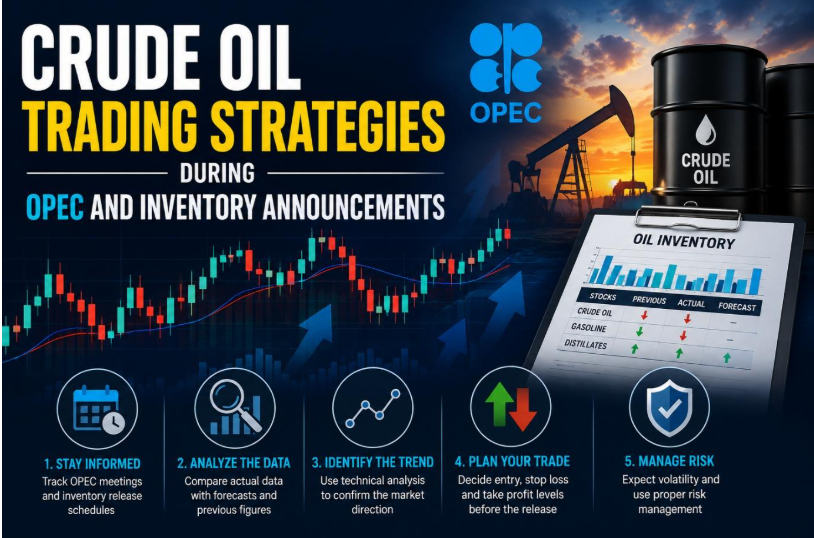
Crude oil prices often move quickly when big market events happen. Two of the most important are OPEC meetings and crude oil inventory announcements, since both can affect supply expectations and how traders feel about the market.
Understanding how these announcements affect Crude oil trading can help you prepare for market movements, make more informed decisions and manage risk effectively. Whether you are a beginner or an experienced trader, learning the right strategies can help you trade with more confidence.
What is Crude Oil Trading?
Crude oil trading involves buying or selling based on expected price movements. Most traders use CFDs to speculate on whether oil prices will rise or fall without owning the physical commodity. The two main benchmarks are Brent Crude and West Texas Intermediate (WTI). Since crude oil prices are influenced by supply, demand, and global events, crude oil is one of the most actively traded and volatile commodities in financial markets.
Why OPEC Meetings and Inventory Reports Matter in Crude Oil Trading?
Oil prices depend on supply and demand, so traders watch for events that might change either. OPEC meetings and weekly crude oil inventory reports are two of the most important.
Such announcements can often cause big moves in the market as traders change their expectations to match the new information. Supply will either contract or expand and there are opportunities and risks for traders. Market sentiment can change fast.
How OPEC Meetings Influence Crude Oil Trading?
The Organisation of the Petroleum Exporting Countries (OPEC) is a group of oil-producing countries that work together to manage oil production. Along with its partners, called OPEC+, they play a major role in balancing the global oil market.
The market often reacts quickly to OPEC’s decisions, especially when the organisation announces a change in oil production. Production cuts can tighten supply and push oil prices higher, while an increase in output may put downward pressure on prices.
Even when production levels remain unchanged, traders closely watch the meeting’s tone and any hints of future, as these can shape market expectations and influence price movements. These decisions can affect the global supply of oil and, therefore, often increase volatility in energy markets.
Understanding Crude Oil Inventory Reports
Inventory reports provide traders with important information about current oil supply and often influence short-term prices. These reports are especially important for online commodity trading because they can cause big price moves in the short term. The two main reports to watch are:
- American Petroleum Institute (API) report
- Energy Information Administration (EIA) report
In general:
- Higher-than-expected inventories may suggest weaker demand or excess supply, which can push prices lower.
- Lower-than-expected inventories could indicate stronger demand or tighter supply, both of which can support higher prices.
But real numbers are only part of the story: market expectations matter just as much. Sometimes the difference between expectations and reported data is more important to prices than the data itself.
Understanding the reports is only one part of the process. Knowing how the market typically reacts can help traders prepare for potential opportunities and risks.
Best Crude Oil Trading Strategies During OPEC Announcements
When it comes to crude oil trading during OPEC meetings, it’s better to be prepared than to try to guess what will happen. Traders use a number of practical strategies, such as:
Stay on Top of Market Expectations
Before each OPEC meeting, analysts make predictions about possible production decisions. Before every OPEC meeting, compare current market expectations with previous production levels and the official announcement. The bigger the surprise, the stronger the market reaction is likely to be.
Wait for the First Market Reaction
In crude oil trading, the first few minutes after an OPEC announcement are often unpredictable.
Instead of rushing into a trade immediately, wait for the initial price movement to develop. Allow volatility to settle and look for confirmation before opening a position. This approach may help reduce the risk of trading false breakouts.
Trade With the Trend
However, when the market is clearly trending, it’s usually safer to trade with the trend than to try to anticipate reversals.
For instance, when the market develops a clear trend after an announcement, it is often safer to trade in that direction. Strong buying momentum may indicate further upside, while sustained selling pressure may suggest continued downside. Traders can avoid unnecessary risks by following confirmed trends.
Trading Strategies During Inventory Announcements
The other major source of price volatility is the weekly inventory reports. Traders can make better trading decisions by understanding how these reports work.
Here are some simple strategies:
Watch the Difference Between Forecast and Actual Data
Markets usually react to surprises.
For example, if analysts expect inventories to increase by 2 million barrels but the actual report shows a build of 5 million barrels, the larger-than-expected increase could put additional downward pressure on oil prices.
Watch Important Price Levels
Support and Resistance levels can matter in high-volatility events. During inventory announcements, traders tend to watch for key support and resistance levels. Breakouts above resistance, breakdowns below support or rejections at key levels can give you further confirmation before you enter a trade.
Avoid Overtrading
Big price swings can entice traders to take multiple positions.
Instead:
- Follow your trading plan.
- Never trade the fast-moving prices.
- Only take high-quality setups that fit your trading plan.
Discipline is often more important than taking every opportunity.
Risk Management Tips for Crude Oil Trading During High Volatility
While trading strategies can help identify opportunities, they should always be backed by disciplined risk management. This is particularly important when trading commodities online during major market announcements, when market volatility can rise sharply. Here are some risk management practices to consider:
- Use stop-loss orders to limit your losses.
- Trade with the right position size.
- Don’t put too much at risk on any one trade.
- Keep up to date with the announcement schedule.
- Don’t trade emotionally after sharp market moves.
Consistent risk management helps protect trading capital in unpredictable market conditions. Robust risk management is one of the most important aspects of crude oil trading, especially when market-moving events such as OPEC meetings and inventory reports trigger sudden price swings.
Common Crude Oil Trading Mistakes to Avoid
Many beginners lose money not because of poor analysis but because of poor discipline.
Some common mistakes are:
- Trading without watching the economic calendar
- Going against the market consensus
- Opening trades immediately after the news
- Using too much leverage
- Trading without a stop loss
- Letting your emotions guide your trading decisions.
Recognising these mistakes early can help improve long-term trading performance.
Conclusion
OPEC meetings and inventory announcements can both provide opportunities and pose risks in the oil market. The key to a successful Crude oil trading strategy is to be prepared, understand what’s going on in the market, and manage risk with discipline rather than react emotionally to price swings. It doesn’t matter whether you are a complete beginner to online commodity trading or want to fine-tune your existing strategy; knowing these important events and following a well-laid-out trading plan will help you make smarter decisions amid changing market conditions.
About the Author